Sign in to a platform
English EN

Your wishlist is empty
Your comparison list is empty
Your cart is empty
Precision agriculture
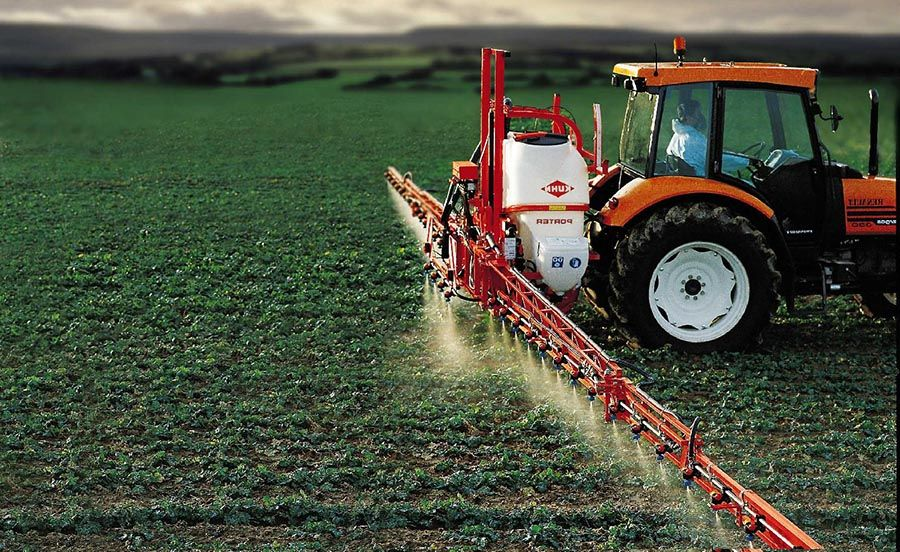
Precision agriculture is a method of farming built on measurements of the crop and the soil, so that each field's needs can be recorded precisely, assessed, and then acted on with great accuracy.
The result is lower spending on inputs such as pesticides and fertiliser, while the wider aim is to improve both the quality and the quantity of the harvest — and to produce an environmentally sound crop at the same time.
The process begins by mapping the fields, which gives a picture of the land under cultivation. Next comes information on the quality and structure of the soil and on which trace elements are lacking or in excess, so that inputs such as fertiliser and pesticide can be added or withheld according to what is actually needed.
Finally, at harvest, the yield of the parcel is measured metre by metre. That is how the effectiveness of the year's decisions is monitored and assessed, and how the right choices are made for the next season's cultivation plan.
Equipment
A tractor GPS is the basic tool for steering along a pre-set path — parallel passes, for example.
As implements such as sprayers and fertiliser spreaders have grown wider, it has become difficult for the driver to pick up the next pass accurately, which leaves gaps or causes overlaps.
The cost of those overlaps typically runs to 15%–20% of the input material.
A tractor GPS guides the driver onto the next pass with an accuracy that, in the right conditions, reaches as little as 5 cm.
Everyday use
GPS earns its keep above all during fertilising and spraying — two jobs where finding the line and holding it are genuinely hard. A GPS guidance system helps you pick up the line again on the headlands and hold it steady across the field.
What GPS gives you:
- Lower fuel use
- Less time on the job
- Higher productivity
- Less input material wasted
- The ability to work at night
Automatic steering
Connect the GPS to auto-steer hardware — or run it on a tractor already prepared for automatic steering — and the GPS can drive the tractor itself.

Comments
No posts found
GPS Tracking Solutions
- All GPS Tracking Solutions
- GPS Tracking for Boats & Jet Ski
- GPS Tracking for Construction Machinery
- GPS Tracking for Corporate Fleets
- GPS Tracking for Agricultural Machinery
- GPS Tracking for Rental Vehicles
- GPS Tracking for Transport & Logistics
- GPS Tracking for Refrigerated Trucks & Cold Chain
- GPS Tracking for Commercial Vans & Deliveries
Information
- Authorised Dealer of TELTONIKA Telematics
- Authorised Dealer of MOTOROLA Solutions
- Authorised Dealer of STELLADORADUS
- Authorised Dealer of KIRISUN
- Store address
- Manufacturers
- Contact us
- About the company
- Blog

Useful
© 2001-2026 GPScom Technologies · Commercial Reg. (GEMI) No. 180170606000